MMAD - A Rugby Academy With a Serious Pedigree

Mynydd Mawr and Dinefwr Rugby Academy (MMAD) is not your average schools rugby programme.
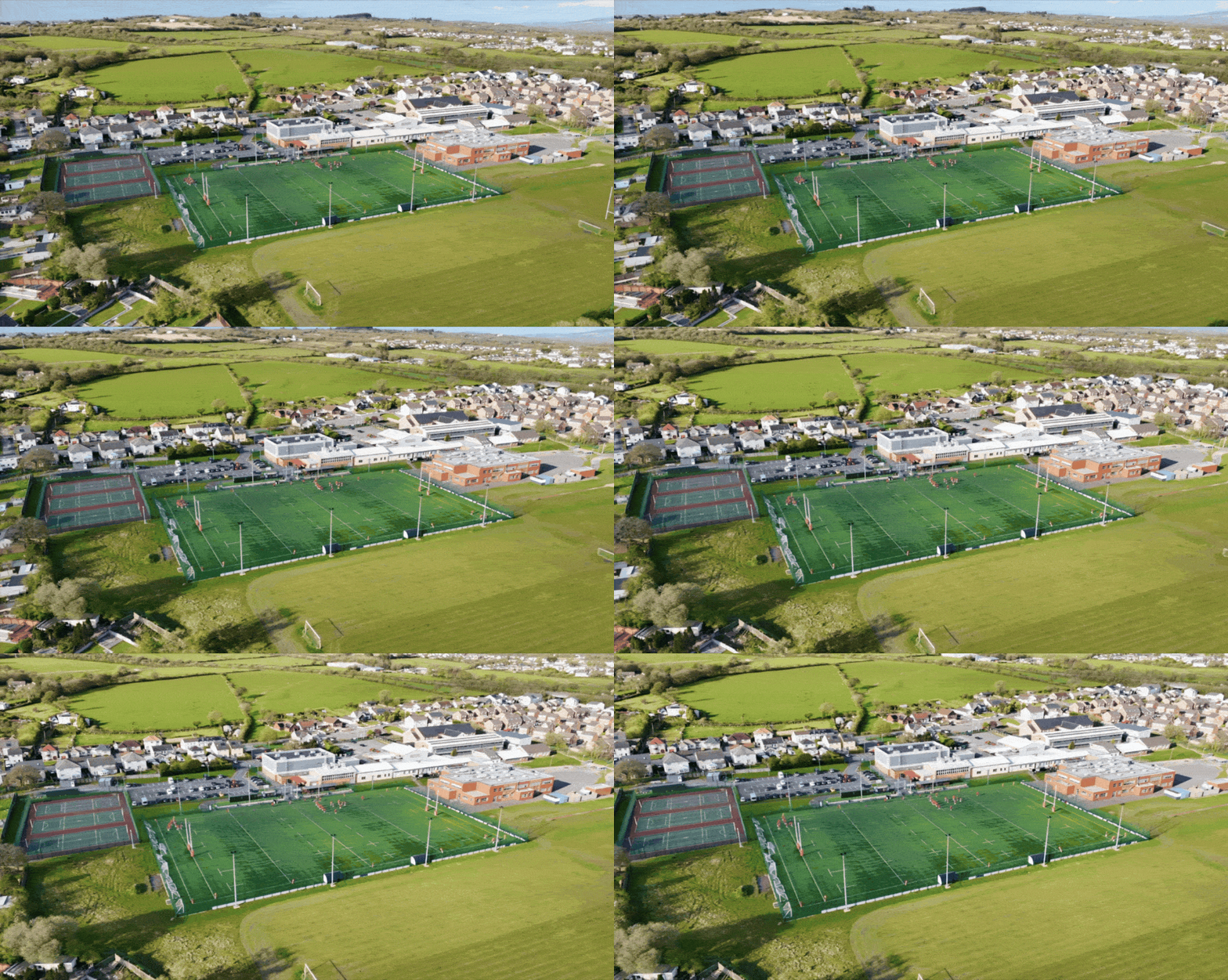
Based in Wales, the academy has produced some of the most recognisable names in the game: British Lions Wyn Jones and Dwayne Peel, international referee Nigel Owens, and internationals Kieran Hardy, Jac Morgan and Harry Randall all began their rugby journey here. Wales U20s and Welsh Women's Head Coach Ioan Cunningham is another name on that list.
The alumni speak for themselves.

But MMAD's identity has never been built on reputation alone. Warren Leach, PE teacher at Maes Y Gwendraeth Comprehensive School and Director of Rugby at MMAD, has spent over 20 years building an environment where development is deliberate and measurable. He runs the district side, oversees the attached CAIS Rugby Academy, and leads all Key Stage 3 and 4 rugby at the school.
His coaching philosophy is straightforward: put players in a professional environment, help them understand the process, and give them the tools to improve.
"It's not just about coaching the individuals. It's about helping them understand the process and how they can improve. The whole professional element is the learning and the understanding of the game."
That philosophy eventually led MMAD to AnalysisPro and a dual-camera AP Capture setup that has changed how the academy films, analyses, and shares its rugby.

The Old Way Wasn't Working
"Back in the old days with video cameras, wet weather, an umbrella over your head, trying to protect yourself from the rain. The quality of the footage was not great, and you'd struggle at home to look at it, trying to work out which player does what."
It's a familiar picture for anyone who has coached community rugby in the UK or Ireland. A handheld camcorder, poor weather, shaky footage, and hours spent squinting at a laptop screen trying to identify individual players. The analysis existed, but the quality undermined the process.
The turning point came through a conversation with Jon Moore, founder of AnalysisPro.
Jon established AnalysisPro 15 years ago and remains involved with the company today. He is also part of the same local rugby community as Warren, and that personal connection mattered. When the limitations of the old setup became clear, it was Jon who suggested MMAD take the conversation further.
"I was speaking to Jon Moore, and he was a great help to me as a coach. He's always tried to put something back into our community. He suggested we have a chat with the AnalysisPro team to take us to the next level of coaching."
What followed was a decision to invest in a permanent, weatherproof IP camera installation: one that would remove the weather dependency, raise the quality of footage, and give the coaching staff a reliable platform to build their analysis work around.
See the picture. Be the picture.
The Setup: Two Cameras, Two Angles, One Cabin
MMAD's AP Capture installation is built around two fixed IP cameras, each positioned to serve a specific analytical purpose.
The first camera sits on a dedicated mast at the halfway line, giving a full side-on view of the pitch. This is the primary match camera: used for live streaming, overall game footage, and the kind of wide picture that shows shape, spacing, and movement across the full width of the field.

The second camera, the more recent addition, is mounted behind one of the rugby posts at the end of the 4G pitch. This end-on angle covers something the side-on view cannot: depth of field, entry into the attacking zone, and the technical detail of set-piece work.

Both cameras are operated from a dedicated video analysis cabin positioned at the side of the pitch. Inside, joystick controllers give the operator full pan, tilt, and zoom control, with footage captured directly to a laptop as a single MP4 file.

Warren is clear about why the joystick matters more than automated alternatives.
"We like the human feel of the joystick and the person behind it with real experience, rather than relying on automated ball-tracking systems. It also teaches the person behind the joystick about the way we want our game played and it gives them an understanding of the detail our game plan requires. It's far better than just a camera tracking the ball."

The installation itself, Warren says, was straightforward.
"The whole process was just so good, to be honest. The support from AnalysisPro is really valued. The installation of all the equipment has been phenomenal. It all went smoothly, even with two cameras to set up. The support from the staff has been superb."
What the Second Angle Unlocks
The upgrade from one camera to two was not just nice to have. It opened up a level of technical analysis that the side-on view alone could not deliver.
Warren explains how the two angles work together during a lineout, one of the clearest examples of the dual-camera benefit.
"With two angles for the lineout, we have footage from behind the hooker watching his throwing technique, while the other angle captures the footwork of the lifters and the speed of movement. It brings the whole process together."

The side-on camera captures the full lineout picture: spacing, timing, the movement of players not directly involved. The end-on camera gets into the technical detail: hand position, foot placement, the specific mechanics that determine whether a lineout works or breaks down.

Put both angles together in an analysis session and a player sees things they simply cannot see from a single perspective. The picture becomes complete.
"We can show the player the full picture, and they can understand the process. They're not limited to one angle anymore. That wider view changes everything."
The Injured Player Workflow
One of the more creative uses of the AP Capture setup at MMAD is the role it gives to players who are sidelined through injury.
Rather than standing on the touchline watching the game, injured players are brought into the analysis cabin and given responsibility for operating the cameras. It keeps injured players engaged in the training environment. It gives them a different perspective on the game. And, practically, it teaches them to see rugby the way a coach sees it.
"When players are injured, they go into the cabin and operate the cameras. The joysticks are easy to use, so they can film a game without any difficulty. They can each cover a different angle, look at technique, break down the process, analyse entries into the red zone, look at support areas, and then zoom in further to talk about the decision-making areas."
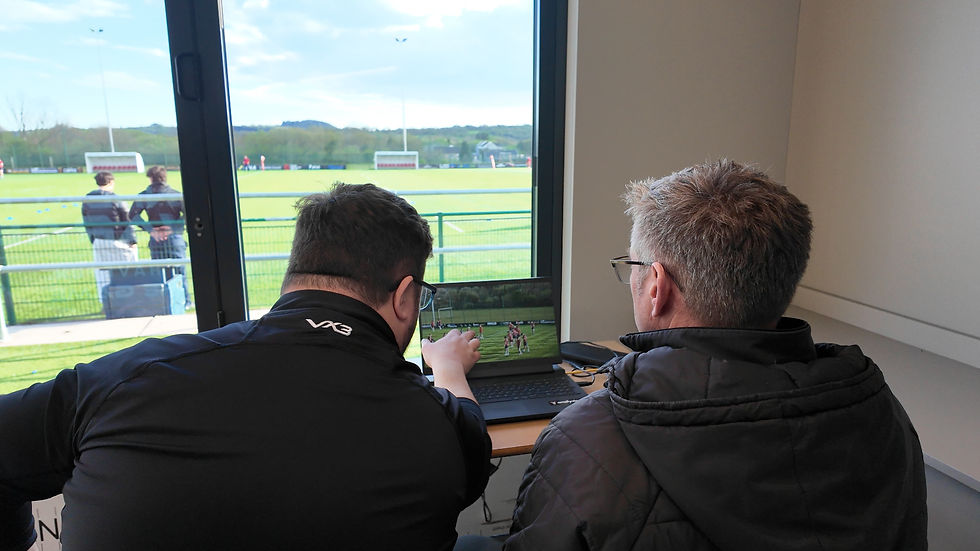
For some players, operating the cameras has sparked a genuine interest in performance analysis as a discipline. Warren has seen players come through the MMAD setup and go on to study video analysis at university. One notable example is Bradley Davies, a former MMAD Academy player who is now a Video Analysis Specialist at AnalysisPro. His career is a direct product of the environment Warren has built: a young person who found his way into the sport technology industry through early exposure to professional-grade analysis tools at community level.
It's a thread that runs through everything MMAD does. The rugby education and the life education are the same thing.
Sitting Down With the Evidence
The feedback loop at MMAD runs from pitch to cabin to analysis room, and it includes parents.
Warren describes a process where players and parents sit together to review footage, with specific clips selected to highlight good moments, good decisions, and areas for technical improvement. The emphasis is on the positive: what the player did well, and how they can build on it.
"We're not just shouting motivational quotes at them. We're helping them technically, and their understanding of the game becomes much better for it. The player is part of that process too: they bring us clips, we talk about the good things they've been doing, and then we work out together how to improve."
The visual evidence changes the conversation. A coach telling a player their footwork is wrong is one thing. A player watching themselves on screen from two angles and seeing it for themselves is something else entirely.
"When players see the picture, the whole process is about understanding what they're meant to be doing within it. Once they've seen it, they can go out on the pitch and be the picture."
Live Streaming to a Global Audience
AP Capture's live streaming capability has added a dimension to MMAD's operation that goes beyond analysis.
Using the built-in live streaming feature, MMAD broadcasts matches live to YouTube. The AP Scoreboard app overlays a live score on the stream, and the academy runs sponsor adverts during breaks. It is, in effect, a professional broadcast operation run by one person from a cabin at the side of a community rugby pitch in Wales.

The live streaming reach has surprised even Warren.
"Grandparents can watch it. If you've got family living abroad or on holiday, it's streamed around the world. There's a big demand for it. It's also an opportunity to showcase these boys and the hard work they put in. The talent we have in Wales is incredible, and it's a great way of showing that."
The live stream has also become a quiet recruitment asset. Telling opposition teams the game will be live-streamed raises the profile of the fixture. Followers grow. The academy's reputation travels further than west Wales.
The Scarlets Pathway: Regional Validation
MMAD's status as a feeder programme for the Scarlets Regional Age Grade teams means the AP Capture setup is not used by the academy alone.
Emyr Phillips, Academy Pathway Manager for the Scarlets, uses the MMAD facility regularly for Scarlets pathway training sessions and fixtures. His players train on the 4G pitch twice a week and benefit from the same dual-camera coverage that Warren's squads use day to day.

"It's been a great help to come down here for the 4G surface and the two cameras. The analysts love it: they come in, click in, and everything is ready to go. It's just great for the boys."
The ease of access matters at regional level, where analysts are working across multiple venues and squads. A setup that requires no configuration, no technical troubleshooting, and no compromises on footage quality removes friction from the workflow.
"It's really important that the players can review sessions back. Having that access, and the ease of everything here, is great for their development. Two camera angles is brilliant. Being able to capture the whole pitch is really useful to us. It's been a huge tool, especially having it in our area."
For MMAD, the Scarlets' regular presence is its own form of endorsement. When a regional professional pathway operation chooses your facility as a base, the standard of your setup is not in question.
The Result: Clarity at Every Level
Warren's summary of what AP Capture has delivered at MMAD cuts through everything else.
"Having access to high-quality equipment has given us all clarity and a clear direction for our game going forward."
Clarity for the coaching staff, who can now deliver technically precise feedback backed by visual evidence from two angles. Clarity for the players, who can see their own performance and understand exactly what is required of them. Clarity for parents, who sit in the analysis room and understand the development process their child is going through. And clarity for the wider community: an academy that started with a camcorder in the rain now broadcasts professional rugby to a global audience on YouTube, with a live scoreboard and sponsor integration.
The equipment changed. The footage quality changed. The depth of analysis changed.
The mission, developing better players by developing better people, stayed exactly the same.
Comments